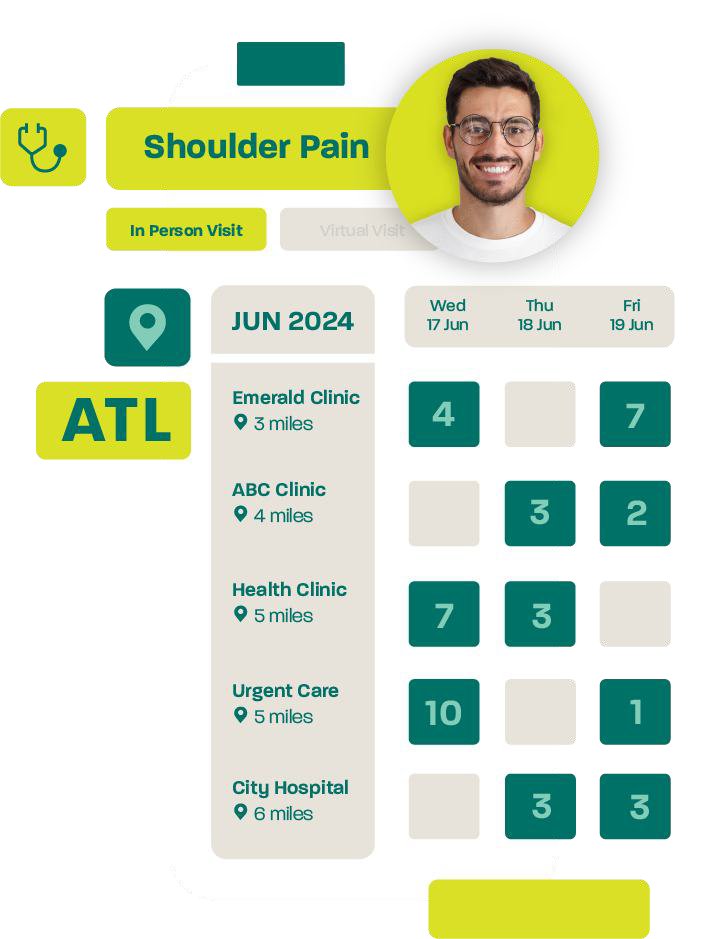
The Self-Scheduling Playbook:
Streamlined
Access for Patients
and Providers

What’s Inside
- 2The New Reality of Patient Access
- 3The Myth of One-Size-Fits-All Scheduling
- 4How to Build Provider-Friendly Self-Scheduling
- 5Driving Patient Adoption: How to Turn Intelligent Scheduling into Measurable Results
- 6From Campaign to Booking: What’s Driving Conversions
- 7What Success Looks Like in Action
- 8The Power of Proprietary Orchestrated Intelligence
The New Reality of Patient Access
Instant, convenient access has become an expectation in every part of life–including healthcare. Patients want 24/7 options to schedule appointments without waiting on hold or navigating complicated phone trees. Yet this rising demand for anytime booking collides with the growing complexity faced by healthcare organizations: more providers, more locations, and countless rules and preferences that must be maintained to ensure accuracy and efficiency.
This guide explores how to reconcile these needs with self-scheduling strategies that make access easy for patients while ensuring providers’ preferences and requirements are maintained.
Built on Trust and Backed by Logic
What Patients Want
- The freedom to book appointments whenever it’s convenient for them.
- Simple, intuitive online options instead of waiting on hold.
- A faster way to connect, not leaving message after message.
What Providers Need
- A way to distribute new patients fairly without creating delays in care.
- Consistent, predictable schedules to maintain efficient daily operations.
- A system capable of enforcing complex rules, so appointments are scheduled accurately the first time.
The Myth of One-Size-Fits-All Scheduling
Skepticism about self-scheduling is common, and it’s understandable. Many healthcare leaders worry it’s impossible to accommodate every provider’s unique scheduling preference, visit types, and patient requirements within one solution.
Traditional methods often force rigid templates that can’t adapt to the realities of busy, multi-provider, and multi-location organizations.
Intelligent scheduling solutions don’t remove complexity. They are built to manage it. By applying the right rules and preferences behind the scenes, they guide every patient to the right provider, visit type, and location. What once felt chaotic becomes a reliable, streamlined process that scales with your organization.
Key Truths About Intelligent Self-Scheduling
Handles detailed, specialty-specific rules with precision
Makes booking easy and intuitive so patients use it
Guides patients to the right visit type, provider, and location every time
Gives organizations full control with customizable, flexible rules
Simplifies scheduling processes to free staff time and reduce errors
How to Build Clinically-Aligned Self-Scheduling
Building clinically-aligned self-scheduling means more than turning on a new feature. It requires thoughtful process that engages providers from the start, ensures the system reflects real clinical workflows, and evolves as your organization grows. A deliberate rollout builds provider confidence and sets the foundation for long-term success.
To design self-scheduling that works in complex healthcare environments:
Engage providers early
Gather input on visit types, preferences, and scheduling concerns so everyone feels heard and invested.
Build and organize rules together
Collaborate to set rules that match clinical workflows, covering visit types, requirements, and locations, and organize them for easy updates.
Pilot, refine, and review regularly
Launch with willing providers, adjust based on feedback, expand thoughtfully, and schedule regular rule reviews to stay aligned with changes.
The Three Steps to Clinically Aligned Self-Scheduling
- EngageGather
provider
input early - Build & OrganizeSet smart rules
that match
workflows - Pilot & ReviewLaunch, refine,
and keep
rules current
Driving Patient Adoption: How to Turn Intelligent Self-Scheduling into Measurable Results
Implementing self-scheduling is only the first step. To see measurable results, patients need to know about it and feel confident using it. Driving adoption means meeting patients where they already interact with your organization and making self-scheduling easy to find.
Effective strategies include:
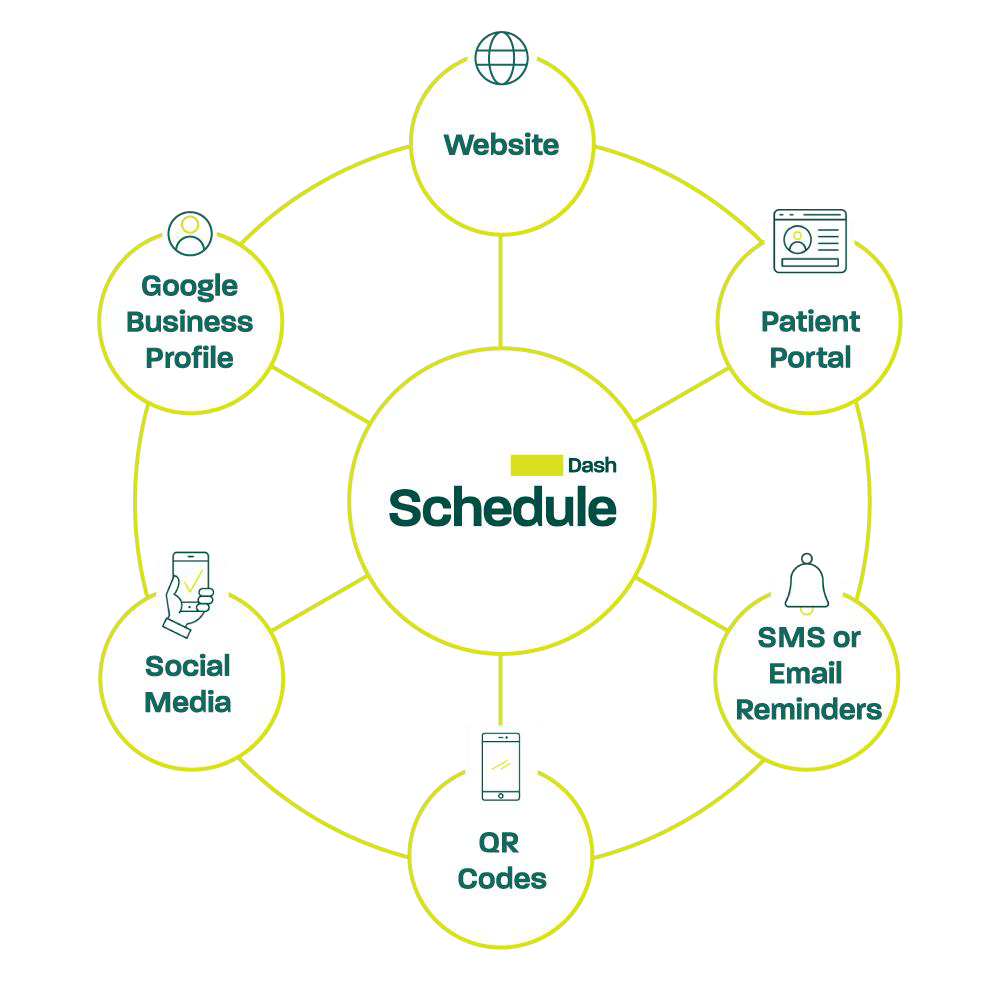
- Prominent self-scheduling links on your website or provider bio pages
- Booking buttons in Google listings and the patient portal
- In-office materials like posters and business cards with QR codes
- SMS or email reminders with direct links for reschedules, referrals, or unfinished bookings.
These efforts make self-scheduling visible and accessible, encouraging more patients to book appointments on their own while reducing call volume and staff workload.
From Campaign to Booking: What’s Driving Conversions?
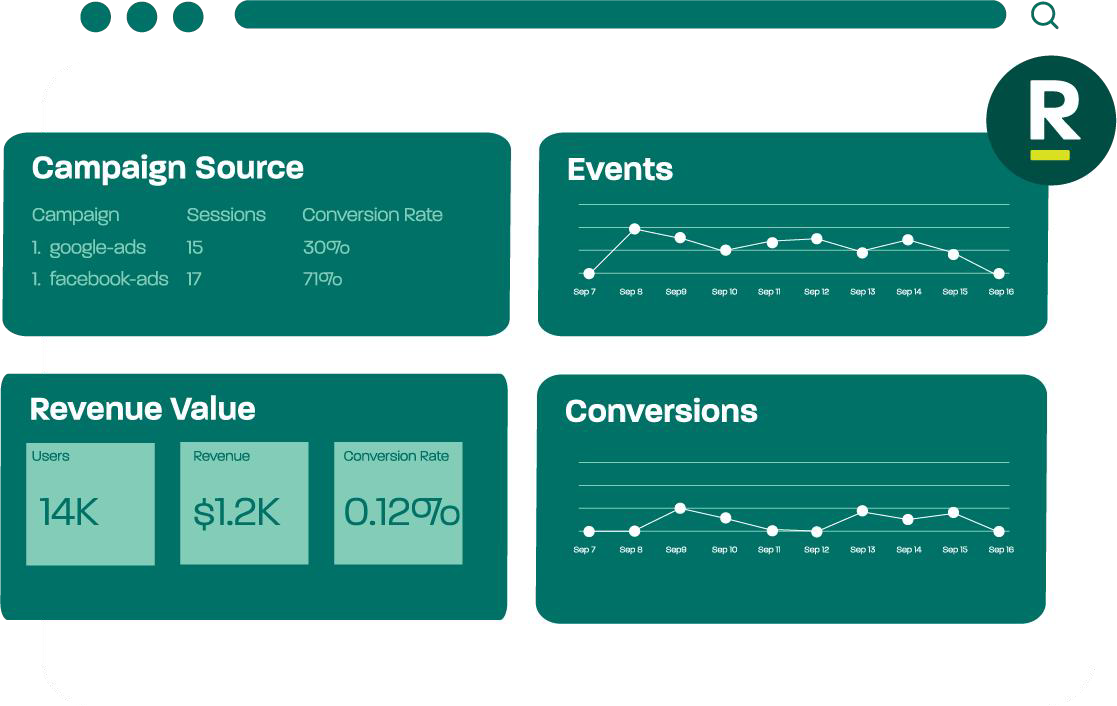
If your goal is to increase self-scheduled appointments, you need visibility into which efforts or channels are actually driving them. Not just clicks but confirmed bookings.
By integrating Google Tag Manager (GTM) or Google Analytics (GA) to track self-scheduling campaigns or activity, your team can see what happens after a patient clicks, including visits to the scheduling page, drop-offs, and confirmed appointments.
Here’s how it works:
- A patient clicks on a campaign link with a UTM tag (a short code added to the end of a URL). This helps GA see where the visitor came from, like a Google ad, email, or social post.
- GTM tracks the campaign source and logs when the patient lands on your online scheduling page.
- The scheduling platform sends key appointment events like page views and confirmed bookings to GA.
- Your team marks those key events and assigns values (e.g., $150 for confirmed bookings) to tie revenue to the campaigns that deliver.
What Success Looks Like in Action
Measurable results show the power of self-scheduling. These outcomes and provider insights show how aligning scheduling with clinical workflows doesn’t just improve access–it drives measurable gains in patient acquisition, retention, and streamlines operations across the organization.
Together, these results highlight the real impact of self-scheduling. But what makes this level of accuracy and success possible is the technology working behind the scenes.
You need different options to schedule and make things more efficient for the patient. For us, they can call in and talk to someone, or they can go to our website and schedule online. If we had to rely solely on the phone system, I can’t imagine how many patients would go somewhere else.
 Dr. Neil TarabadkarOrthopedic Surgeon

New Data Indicates Industry-Wide Surge in Patient Self-Scheduling Adoption
50%
Decrease in no-show rates with self-scheduled appointments
53%
YoY increase in self-scheduling adoption
30%
More patients used self-scheduling tools in 2024
Source: Relatient Press Release (Business Wire)
The Power of Proprietary Orchestrated Intelligence
At the heart of Relatient’s self-scheduling tool is the intelligent scheduling platform, Dash®, powered by proprietary orchestrated intelligence. Dash® applies layered scheduling logic, so every patient is matched with the right provider, visit type, and location every time.
It supports complex workflows like managing referrals, routing new patients efficiently, automatically filling cancellations from a waitlist, and identifying high-priority appointment requests based on urgency. Rules adapt seamlessly to patient type, chief complaint, insurance, provider preferences, and evolving organizational needs.
Dash® combines advanced automation with localized clinical workflows and flexible technology, giving organizations the accuracy and control they need to scale self-scheduling confidently.