The Patient
Access
Decisioning
Guide

From Hype to High-Stakes: The New Reality of Healthcare
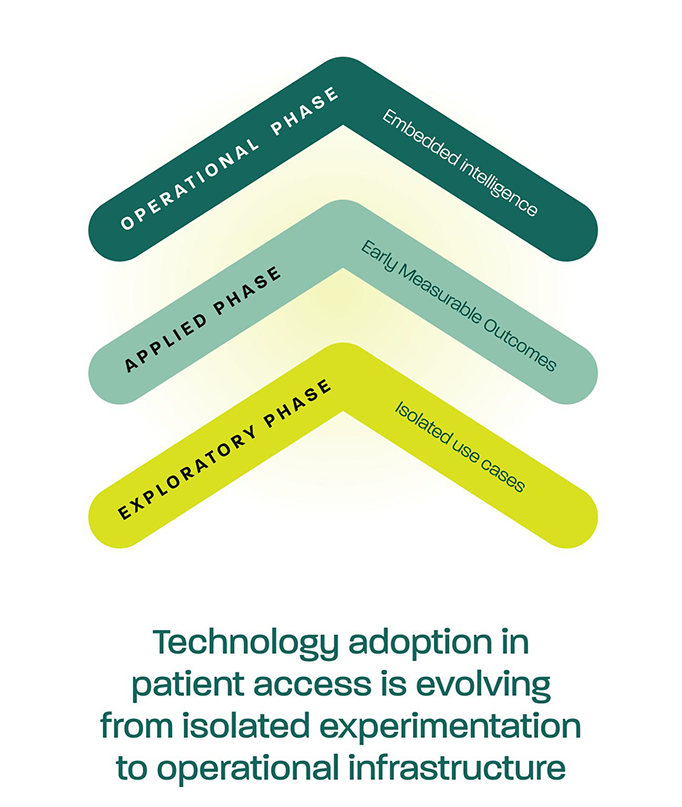
Across the United States, patient appointment wait times now average more than three weeks, revealing a growing strain on healthcare operations and access to care. To address these delays, healthcare leaders are shifting investment priorities in scheduling technologies that improve efficiency, reduce manual workload, and expand access channels.
In a recent survey, healthcare executives indicated prioritizing and investing to enhance their patient’s experience while also seeking to increase efficiency. The leading access priorities included call center infrastructure upgrades, patient portal enhancements, and AI-enhanced scheduling tools, highlighting a shift toward digital-first, operationally driven transformation across patient access.
Among these investments, AI-enhanced scheduling tools have emerged as a key level for change. Intelligent platforms can predict no-show risk, optimize appointment slots, and automatically notify patients when last-minute openings arise. By transforming capacity management into a proactive process, healthcare organizations are moving from curiosity to capability and embedding intelligence directly into the operations that define patient access.
Where to Begin: Anchoring Intelligence in Patient Scheduling
For many healthcare leaders, technology decisions begin with enthusiasm but quickly meet complexity. Often, advanced features sound promising but don’t always address an organization’s immediate realities of scheduling and access operations. The result can be stalled rollouts, unclear ROI, and solutions that don't meaningfully lighten operational workload.
One of the most persistent pain points is waitlist management. When patients cancel or reschedule, staff spend hours manually calling others to fill open slots. Intelligent automation can handle this process automatically by sending messages to patients on the waitlist the moment a slot becomes available, allowing them to claim the opening within minutes. This reduces manual effort and prevents lost appointment capacity.
The most effective starting point for automation is where it complements existing workflows. High-volume, repetitive scheduling activities such as verifications, reschedules, and cancellations follow clear patterns, making them ideal for automation that improves accuracy, saves time, and builds early trust across teams.
Rethinking How Technology Decisions Are Made
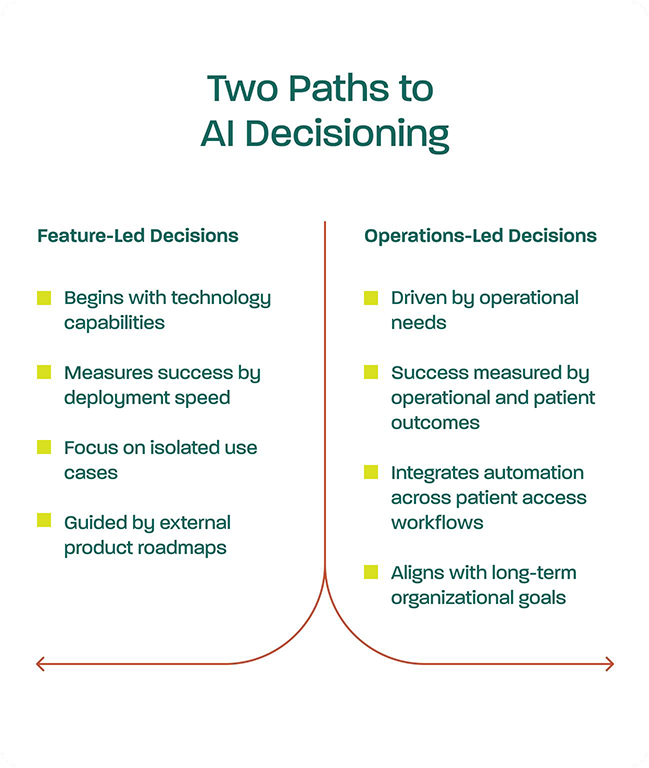
The differences between short-term pilot and lasting value often come down to how decisions are made. Many organizations still begin by comparing product features rather than assessing what fits within their day-to-day workflows.
Feature-led adoption can generate quick excitement but rarely long-term success. It often results in disconnected tools that operate in silos.
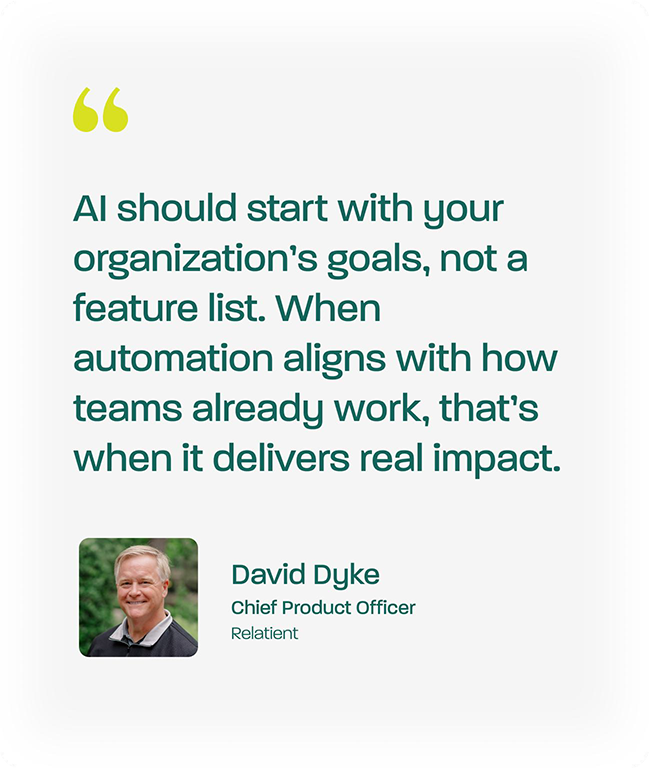
“Someone shouldn’t tell you what you need before they understand who you are,” Dyke shared. “In healthcare, we would never prescribe before diagnosing, and the same applies to AI.”
By contrast, operations-led adoption starts with how scheduling, staffing, and coordination already function, ensuring new technology integrates seamlessly with existing systems, data flows, and provider rules. This mindset shift from feature-first to operations-led thinking ensures every investment strengthens access, efficiency, and patient experience.
The Patient Access Decision Matrix
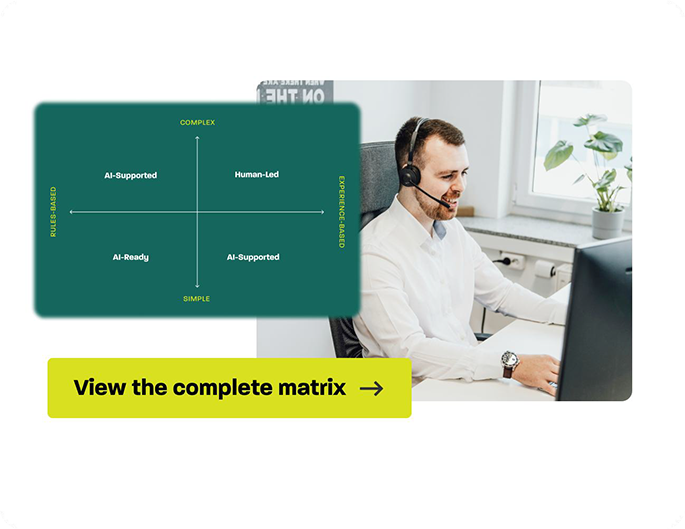
As intelligent automation becomes more embedded in patient access, leaders need a clear way to evaluate where it adds value and where human interaction remains essential. The Patient Access Decision Matrix helps organizations make that distinction.
The framework maps patient access tasks across two dimensions: how rules-based a process is and how complex it is to complete. This helps organizations determine which workflows can be automated, which are best supported by automation, and which should stay human-led.
For example, routine scheduling tasks such as appointment verifications, cancellations, and reminders follow clear, consistent rules. These can often be automated to reduce repetitive work. More nuanced tasks like prescription refills, referral outreach, or pre-visit instructions combine structure with patient context, making them better suited for assistance rather than full automation.
On the other hand, tasks that require human empathy, discretion, or clinical understanding such as resolving billing disputes or managing care coordination depend heavily on human judgment. Keeping these human-led ensures quality interactions and protects patient trust.
The Decision Matrix provides a simple way to visualize how automation can fit into daily operations without overextending. This framework also leads directly into the next section, which outlines how to apply it in practice through a phased adoption strategy.
The Patient Access Decision Matrix
A framework for aligning automation with operational reality.
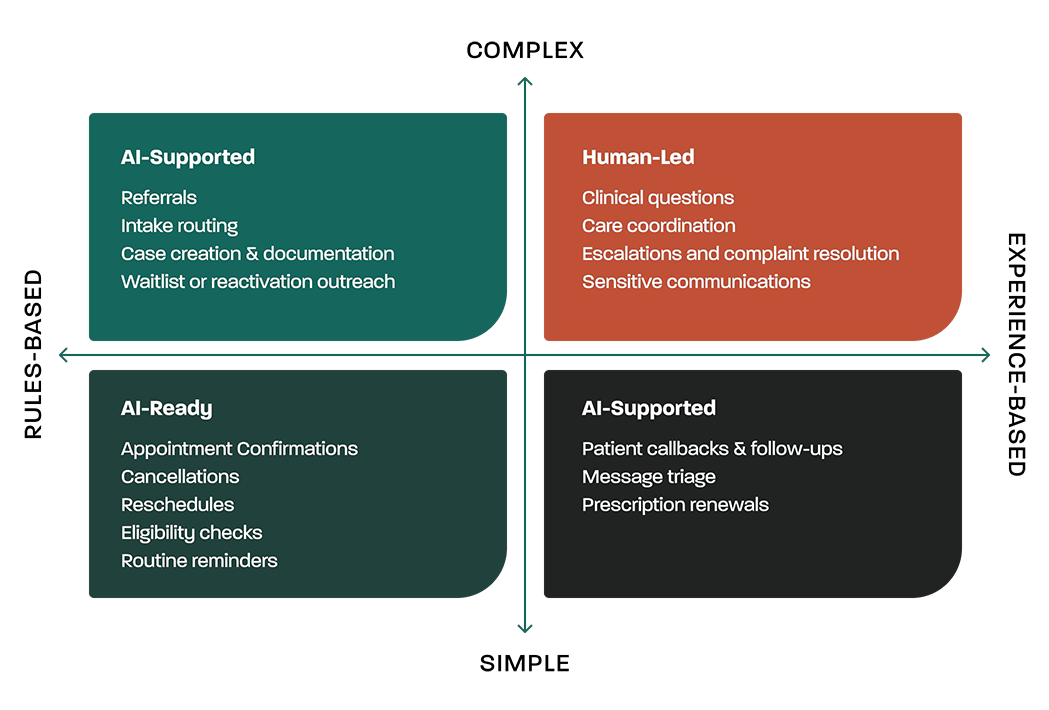
The Decision Matrix provides a strategic lens for aligning technology investment with operational priorities. It distinguishes where automation enhances performance, where human oversight remains essential, and how leaders can scale impact with intention.
Building Momentum: The Four Phases of Operational Maturity
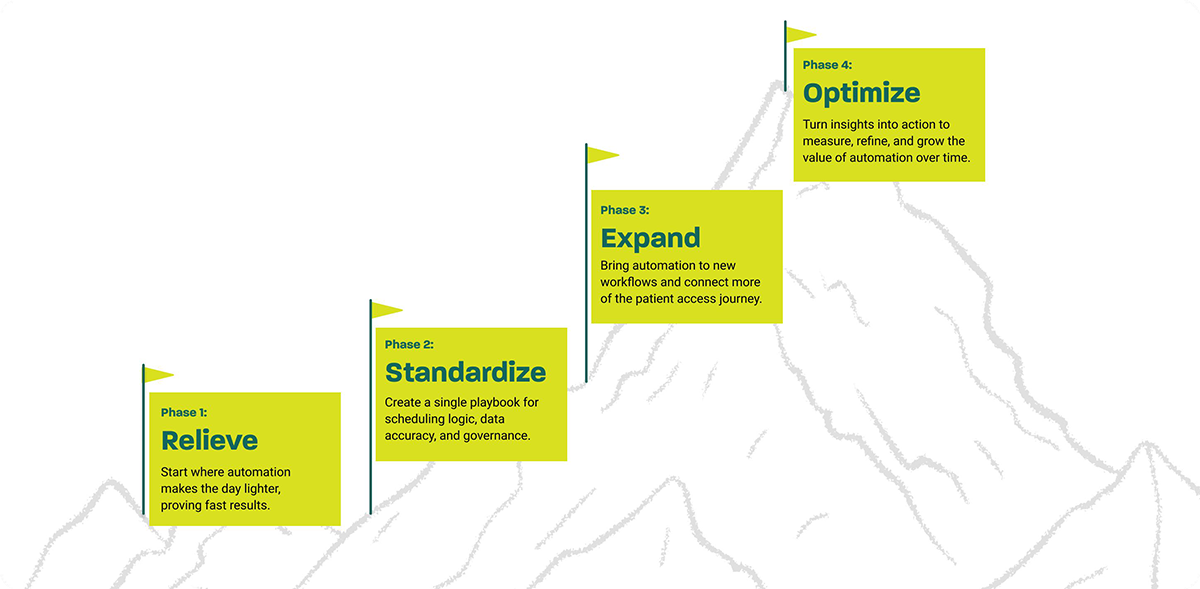
Once leaders understand where automation fits, the next step is to scale with intention. The Four Phases of Operational Maturity outline how to move from early, low-risk automation wins to a fully connected, intelligent access operation.
Each phase balances innovation with stability, giving teams confidence and visibility into what’s changing and why:
Relieve: Begin by automating repetitive tasks to free staff capacity and validating smart workflow logic.
Standardize: Apply consistent scheduling rules and data governance across every access channel.
Expand: Extend automation to related workflows such as referrals and billing inquiries.
Optimize: Use analytics to refine performance, measure ROI, and guide future operational decisions.
Together, these stages create a roadmap for continuous improvement, strengthening trust, improving accuracy, and supporting patients with simpler, more reliable access to care.
The Four Phases of Access Adoption: Climbing Toward Operational Maturity
From early scheduling automation to ongoing optimization, each phase marks progress toward a connected, data-driven access strategy that balances efficiency with empathy.
Connecting Automation to What Matters Most
Technology is a powerful tool, but it is not the ultimate solution. True progress in patient access happens when technology supports the people and processes that already make care work. The organizations seeing the greatest results use automation to enhance their existing strengths. They focus on outcomes that matter most: appointment accuracy, call resolution, and patient experience.
When automation improves scheduling accuracy or reduces the time needed to confirm or reschedule appointments, the benefits extend across the system. Patients are guided to the best experience every time, whether that means receiving a smart link to self-schedule a new appointment or connecting with staff for more complex needs.
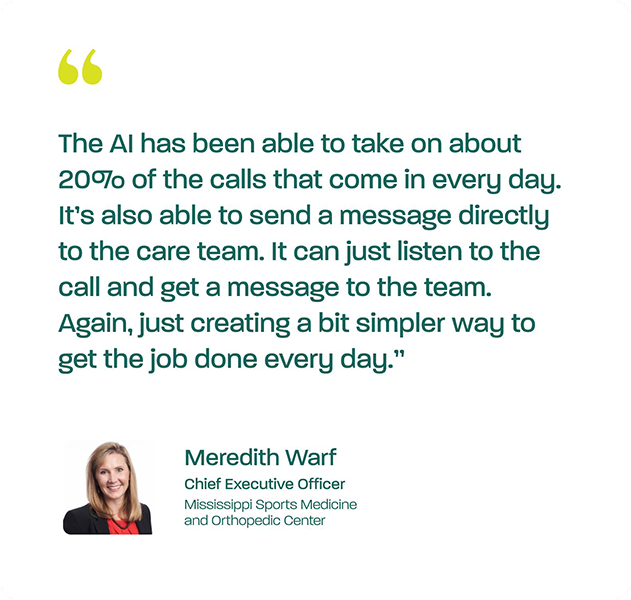
“The AI has been able to take on about 20% of the calls that come in every day.” shared Meredith Warf, CEO of Mississippi Sports Medicine and Orthopedic Center. “It’s also able to send a message directly to our care team.”
This is where technology meets strategy. When all departments share a unified definition of success, automation stops being about systems and starts being about impact. It strengthens performance, reinforces trust, and ensures every workflow improvement translates into real patient value.
Putting the Framework into Motion
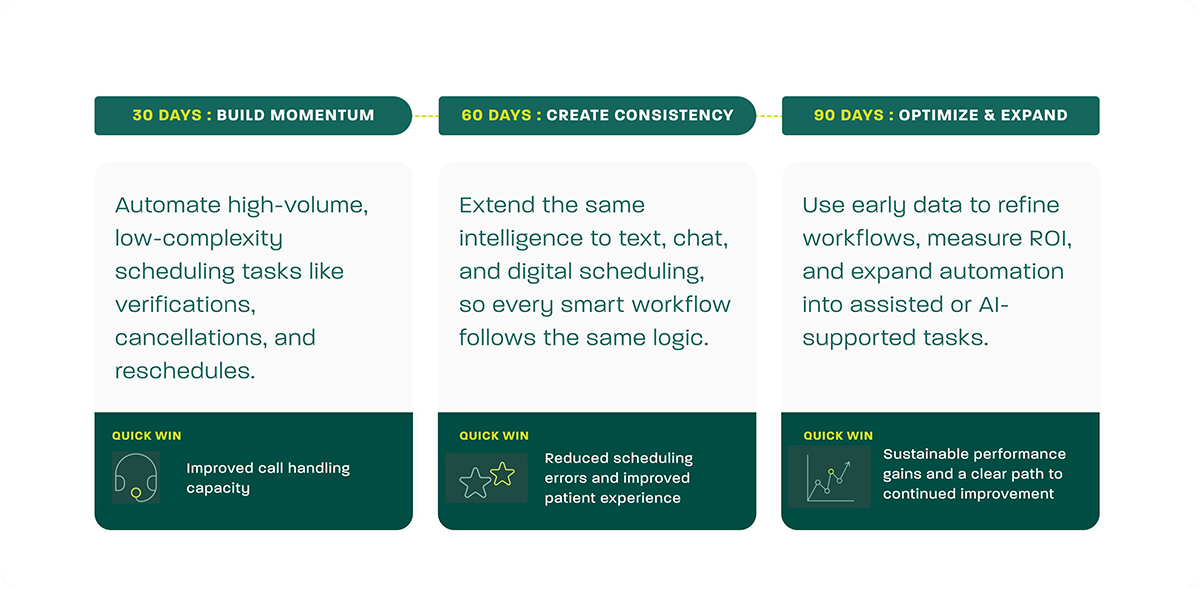
Once the framework is defined, success depends on how it’s put into practice. The most effective approach follows a structured rollout, one designed to show measurable impact early, minimize disruption, and build confidence across teams.
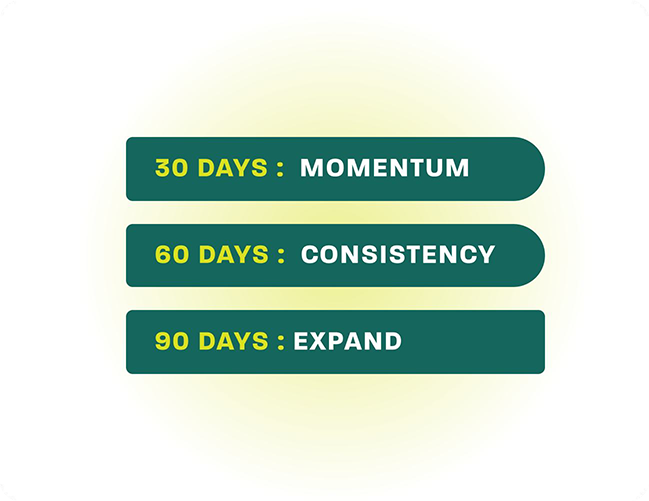
At 30 days, the focus is on relief: automating the highest-volume, most repetitive scheduling tasks. These workflows often represent almost half of inbound call volume and deliver fast, visible results for teams.
By 60 days, the goal shifts towards consistency. Teams align localized rules and preferences across every scheduling channel whether it’s phone, text, chat, or web, ensuring automation follows the same logic everywhere patients book care.
At 90 days, organizations move into optimization. With real performance data available, leaders can refine logic, measure ROI, and identify additional workflows ready for assisted or automated support.
The goal is steady progress with low risk, with each phase delivering measurable outcomes that build confidence and pave the way for broader adoption.
Turning Insight into Action Through a Structured, Low-Risk Rollout
From Operation to Orchestration: The Power of Intelligent Scheduling
Throughout this guide, one principle has been consistent: technology creates real impact when it strengthens the operations that already define patient access.
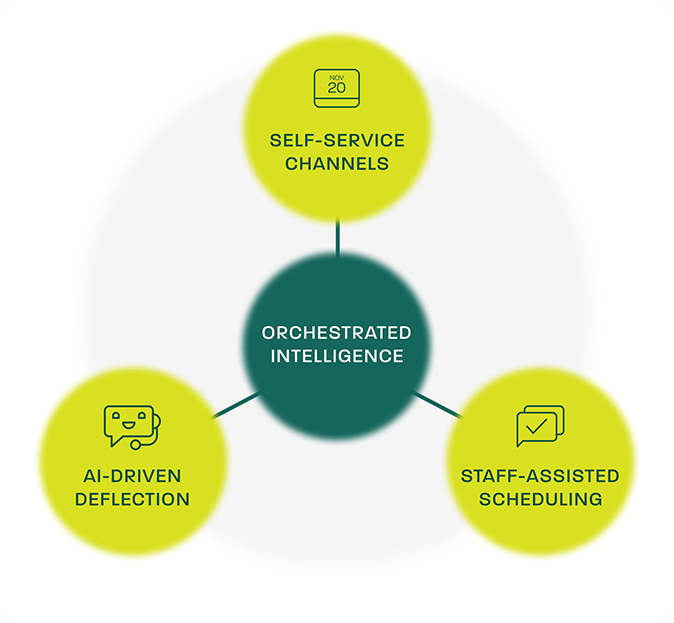
Intelligent scheduling is where that alignment becomes orchestration. It connects localized rules, contact center workflows, and digital channels through one coordinated layer of logic. Every interaction, whether managed by staff or automated, follows the same framework for accuracy, speed, and context.
When automation becomes orchestrated, every part of access moves in sync. Staff spend less time managing tasks, patients get faster access to care, and leaders gain measurable performance.